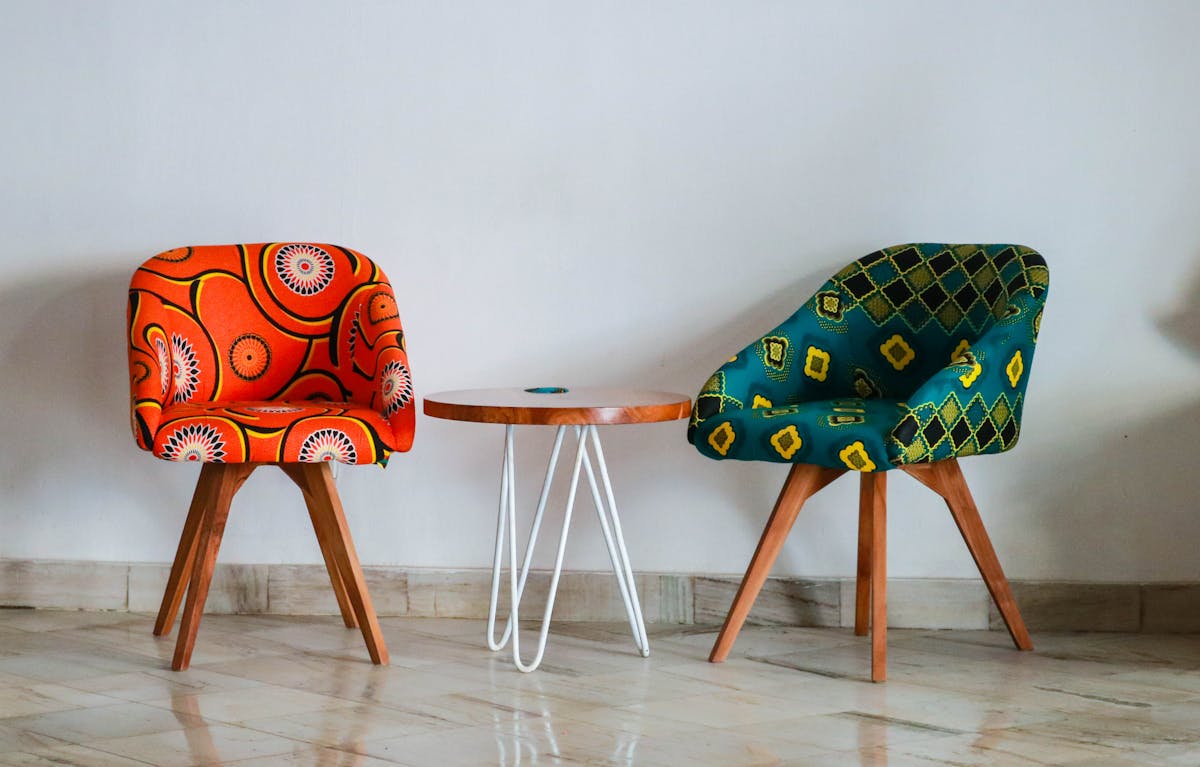
Mid-century modern remains the dominant furniture style of our time. From genuine Eames reproductions to walnut-veneered sideboards and tapered-leg sofas in mustard or teal, the MCM aesthetic has never been more widely adopted — or more misunderstood. The furniture has been perfected. The art pairing, however, is where most rooms fall apart.
The challenge is that mid-century modern furniture has a very specific visual vocabulary — clean lines, organic forms, honest materials, bold colours applied judiciously — and not all art speaks that language. Traditional landscape paintings, overly ornate botanical prints, and heavily gilded frames all clash with the rational, functional spirit of MCM design. Getting the art right requires understanding what mid-century modern actually values.
The Design Language of Mid-Century Modern
MCM emerged from the post-war belief that good design could improve everyday life. It valued function, honesty of materials, and an optimistic, forward-looking aesthetic. The colours of the era — avocado green, mustard yellow, burnt orange, teal — were confident and deliberate rather than safe.
Art that works with MCM furniture needs to share some of this spirit: confident, often graphic, with a clear visual point of view. This naturally leads toward certain art categories and away from others.
Art Styles That Work Perfectly With MCM Furniture
Geometric Abstract Art
The geometry of mid-century modern design — the hexagonal, circular, and angular forms — finds natural echo in geometric abstract art. Bauhaus-inspired prints, geometric colour blocks, and abstract compositions with strong structural logic all feel completely native to an MCM room.
Vintage Travel and Graphic Posters
The mid-century golden age of travel poster design is one of the art world’s great unsung treasures. Pan Am, TWA, National Parks, and state tourism posters from the 1950s–1970s have exactly the graphic quality and colour palette that MCM furniture demands. Original posters are expensive but reproductions are everywhere and frequently excellent.
Retro Botanical and Nature Prints
The organic forms of MCM design — think Eames’s molded plywood chairs inspired by the human skeleton, or the kidney-shaped coffee tables of the 1950s — have a deep affinity with nature. Mid-century botanical prints, with their strong graphic quality and honest colour, feel entirely at home.
Abstract Expressionist Prints
Pieces influenced by the Abstract Expressionist movement of the 1950s — bold marks, honest process, confident gesture — were the gallery art of the MCM era. Reproductions of works by Rothko, Kline, or de Kooning, or contemporary abstract art working in that tradition, create a genuinely period-appropriate room.
Best Wall Art for Mid-Century Modern Rooms — Our Picks

Retro National Parks Travel Poster Set of 6
Classic National Parks graphic posters in authentic 1960s illustration style — the definitive MCM art choice.
$49 View on Amazon
Bauhaus Geometric Abstract Print Set
Trio of Bauhaus-inspired geometric prints in primary colours — exactly the graphic quality MCM rooms demand.
$38 View on Amazon
Mid-Century Style Botanical Print Set of 3
Bold graphic botanicals in avocado, mustard, and burnt orange — period-perfect for MCM rooms.
$35 View on Amazon
Abstract Expressionist Large Canvas — Earth Tones
Large format abstract canvas in walnut, burnt sienna, and ochre — the MCM colour story in gallery form.
$88 View on Amazon
Vintage TWA Travel Poster — Graphic Print
Authentic-style mid-century airline travel poster — works perfectly with teak sideboards and Eames chairs.
View on Etsy
Geometric MCM Abstract — Original Print
Contemporary geometric abstract designed specifically in the MCM tradition — warm tones, strong graphic structure.
View on Etsy✕ What to Avoid
- Traditional oil paintings in heavy gilded frames — they clash with MCM’s clean rational aesthetic
- Overly decorative or ornate prints — MCM values restraint and graphic clarity
- Contemporary minimalist photography in cool grey tones — often too cold for MCM’s warm palette
- Family photo galleries — they interrupt the room’s design integrity
- Art with excessive texture or impasto — MCM prefers flat, graphic qualities in its art