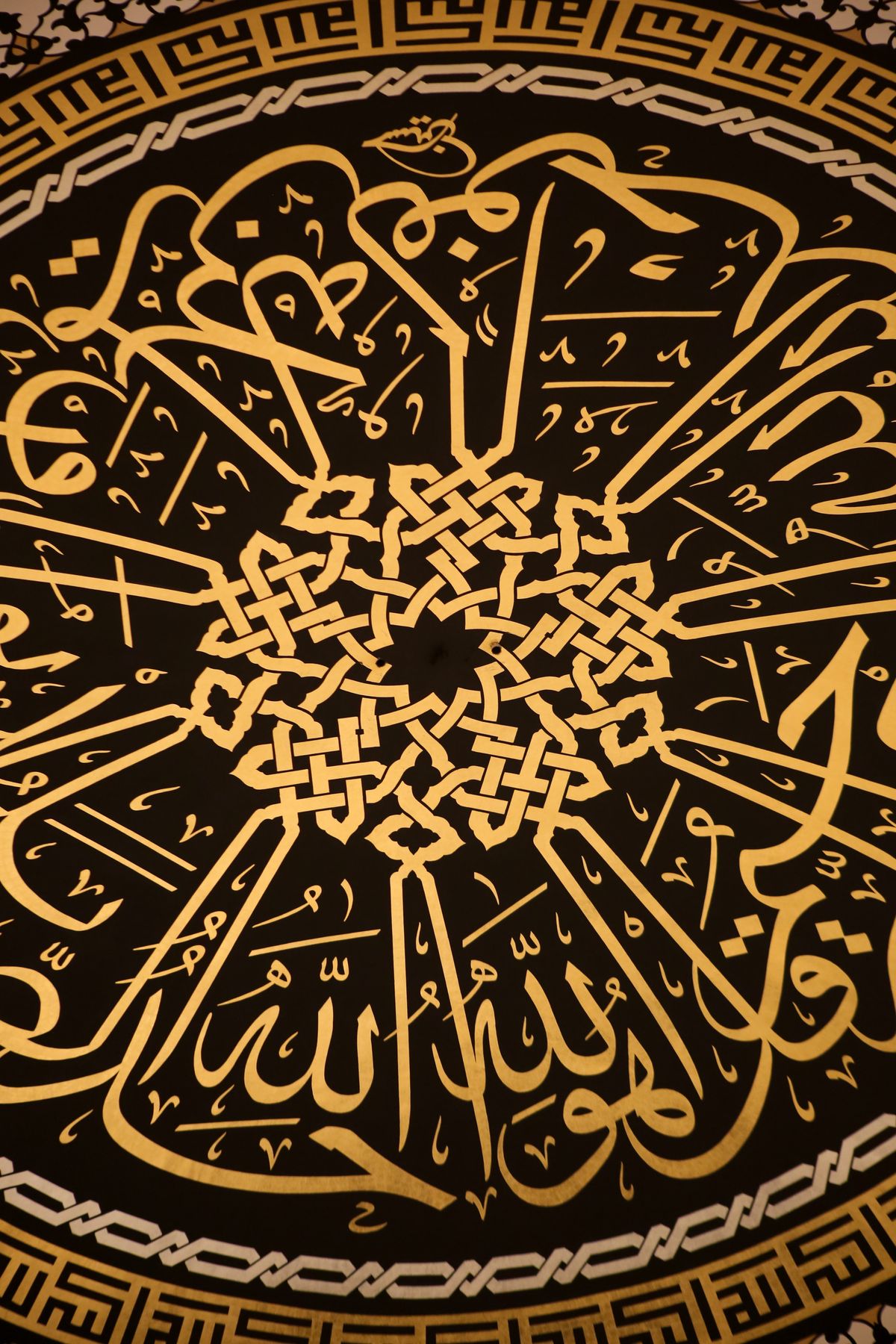
Yaprak Oyma: The Ottoman Art of Carving Calligraphy Into a Living Leaf
Of everything covered in this guide, leaf carving — yaprak oyma in Turkish — is the most likely to be genuinely new to a Western audience. The technique transforms an ordinary leaf into a delicate, lace-like skeleton, then uses that skeleton as the surface for calligraphy, fine linework, or imagery. It’s a small, specialist craft, but a striking one, and worth understanding on its own terms before folding it into any broader category of “Islamic art” or “Turkish decor.”
How a Leaf Becomes a Canvas
The foundation of the craft is leaf skeletonization: removing a leaf’s soft tissue while preserving its network of veins intact, leaving a fragile, lace-like structure that still holds the leaf’s original shape. This can be done through controlled decomposition, chemical treatment, or careful mechanical work, and the technique itself is not unique to Turkey — skeletonized leaves have been used decoratively in craft traditions across many cultures, including well-documented practices in South and East Asia.
What distinguishes the Turkish application is what happens next: rather than leaving the skeleton leaf as a purely textural decorative object, artisans hand-cut or paint calligraphy, geometric pattern, or fine imagery directly onto the remaining membrane, then preserve, mount, and often gold-leaf the finished piece for framing. The scale of the work is inherently small and delicate — a single leaf, rarely more than a hand’s width — which makes the level of detail achieved genuinely remarkable relative to the size of the surface.
Why This Craft Rewards Close Attention
Because the working surface is a single, irregularly shaped, extremely fragile leaf rather than a sheet of paper or canvas, every piece is inherently one-of-one — no two leaves skeletonize identically, and the artisan has to adapt the composition to the specific vein pattern and shape of the individual leaf in hand. This gives leaf-carved art a quality that’s difficult to replicate in any mass-produced medium: genuine, unrepeatable uniqueness built into the raw material itself, before any actual carving begins.
The fragility of the medium also means preservation matters enormously — a finished piece is typically laminated, resin-coated, or sealed behind glass specifically to protect the leaf skeleton from humidity and handling damage, since an unprotected leaf skeleton is extremely delicate and vulnerable to tearing or disintegration over time.
Pairing a small, detailed leaf-carved piece with a larger canvas anchor elsewhere in the room often works well — Amazon’s canvas art collection is a reasonable place to browse for that anchor piece.
Browse Canvas Art on AmazonWhat Leaf-Carved Pieces Typically Depict
Religious calligraphy — short verses, the word Allah, single Names from the 99 Names — is a common subject, given the medium’s association with fine, devotional detail work. But the craft is not exclusively religious: leaf-carved pieces also commonly depict Istanbul landmarks (Hagia Sophia, the Bosphorus skyline), national symbols, and even portraiture, a range worth understanding fully before assuming any leaf-carved piece is automatically an Islamic art object.
For a home that wants something genuinely conversation-starting rather than another abstract canvas, a leaf-carved piece — regardless of subject — tends to prompt the same reaction: disbelief that the object in the frame was, at some point, a living leaf.
Ottoman Palette Reference
What to Avoid
- Displaying an unprotected or poorly sealed leaf-carved piece in a humid room like a bathroom
- Assuming every leaf-carved piece is religious in subject without checking
- Handling a leaf-carved piece without appropriate care given the extreme fragility of the underlying material
- Buying without asking how the piece has been preserved (resin, lamination, or sealed glass framing)
Pieces Worth Considering


Frequently Asked Questions
The underlying skeletonization technique is used decoratively across several cultures, but the specific application to fine calligraphy and Ottoman-style imagery is a distinctly Turkish specialization.
Quite fragile before preservation — reputable pieces are laminated, resin-coated, or sealed behind glass specifically to protect against humidity and handling damage.
No — while religious calligraphy is common, the craft is also used for Istanbul landmarks, national symbols, and portraiture.
Somewhere it will be viewed up close — a hallway, desk, or reading nook — rather than a large room where fine detail would be lost from typical viewing distance.
The Bottom Line
Leaf carving is a genuinely distinctive craft, built on a fragile, one-of-one natural material that no mass-production process could replicate. Whether the specific piece carries religious text or a secular subject, its real appeal lies in the sheer improbability of the medium itself — and that’s worth appreciating before folding it into any single broader category.