Ottoman Calligraphy Meets Modern Craft: 3D Canvas, Gold Leaf & Laser Work
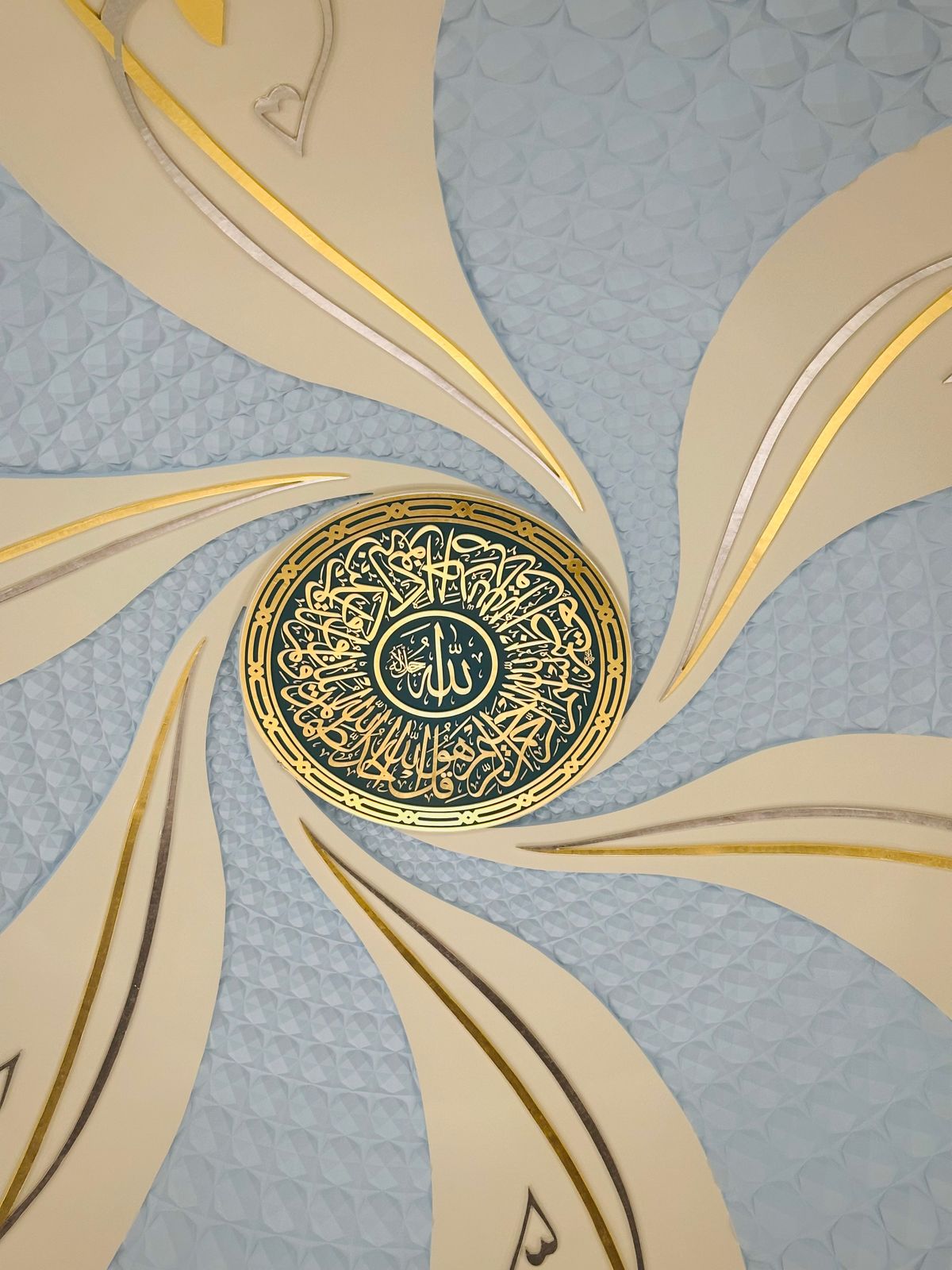
A growing number of Turkish ateliers now market their work as “modern calligraphy,” and the phrase is worth pausing on before buying anything described that way. In the Western tradition, modern calligraphy usually means a genuinely different lettering style — looser, less rule-bound, often hand-lettered with a brush pen. In the Ottoman and Turkish context, what’s actually being sold under this label is almost always the same body of classical religious text, rendered through modern production techniques rather than a new script or style.
What’s Actually Different: Technique, Not Script
The content itself — Ayat al-Kursi, the four protective short chapters known as the Quls, Bismillah, the 99 Names of Allah — is identical to what’s been rendered in Ottoman calligraphy for centuries, typically in the classical Kufic, Naskh, or Thuluth hands. What changes under the “modern” label is how that calligraphy reaches the wall: 3D-printed relief canvas that gives flat lettering genuine physical depth, gold leaf (varak) application over laser-cut or printed letterforms, and black or richly colored canvas backgrounds that would have been unusual in traditional paper or vellum work.
This distinction matters practically. If you’re drawn to this category expecting an entirely new calligraphic style, you may be disappointed to find the same verses rendered again; if you understand it correctly as a materials and production evolution of a very old tradition, the appeal is much clearer — genuinely striking dimensional and light-catching effects applied to text that has carried real devotional weight for centuries.
The Techniques Worth Knowing
3D-printed or relief canvas builds the calligraphy up from the surface using layered printing or molded compounds, so the letterforms catch light and cast shadow in a way flat printing cannot — a technique that didn’t exist in any historical form of Ottoman calligraphy and represents a genuine contemporary addition to the tradition. Gold leaf (varak) application, by contrast, is a technique with real historical continuity — traditional illuminators used gold leaf extensively — now applied over modern relief or laser-cut bases rather than hand-painted manuscript borders.
Laser-cut work offers a third approach: precision-cutting letterforms from wood, metal, or acrylic sheet, producing crisp negative-space calligraphy that can be mounted with a gap from the wall to cast a shadow silhouette. Each of these techniques suits a different aesthetic — relief canvas for a warmer, more tactile look, laser-cut metal or wood for a cleaner, more architectural presentation.
If you’d rather start with a simpler, ready-to-hang canvas piece while you explore this category, Amazon’s canvas art collection is worth a browse.
Browse Canvas Art on AmazonWhat to Actually Look For When Buying
Given that the content is standardized across most of this category, the real differentiator when buying is craftsmanship in the technique itself: does the relief printing have crisp, undistorted letterforms, or does the dimensional effect blur the calligraphy’s actual accuracy? Is the gold leaf genuine metal leaf or a cheaper metallic-look print — a distinction that affects both appearance and longevity, since real gold leaf resists tarnishing in a way synthetic gold-tone finishes generally do not.
It’s also worth asking directly which classical script a piece is based on, since sellers in this modern-materials category don’t always specify — a genuinely well-made piece should still be traceable to a specific hand (Kufic, Naskh, Thuluth) even if its production method is entirely new.
Ottoman Palette Reference
What to Avoid
- Assuming ‘modern calligraphy’ means a new lettering style rather than new production technique
- Buying dimensional relief canvas without checking the underlying letterforms are still accurate and undistorted
- Paying a premium for ‘gold leaf’ without confirming whether it’s genuine metal leaf or a printed metallic finish
- Choosing a piece with no traceable classical script simply because the production technique looks impressive
Modern Production Techniques at a Glance
| Technique | What It Is | Best Suited To |
|---|---|---|
| 3D / Relief Canvas | Layered printing or molding for physical depth | Warm, tactile living-room pieces |
| Gold Leaf (Varak) | Genuine metal leaf over a printed or cut base | Traditional-leaning formal spaces |
| Laser-Cut Work | Precision-cut wood, metal, or acrylic letterforms | Clean, architectural, shadow-play display |
Pieces Worth Considering


Frequently Asked Questions
Usually not — it typically refers to the same classical verses and scripts rendered through modern production techniques like 3D relief printing, gold leaf, or laser cutting, rather than a new style of lettering itself.
Genuine gold leaf has a slightly uneven, hand-applied texture and resists tarnishing over time; ask the seller directly, since this significantly affects both price and longevity.
It shouldn’t, if well made, but the dimensional printing process can occasionally blur fine letterform detail — worth checking close-up photos before buying.
Kufic and Thuluth appear most often, given their bold, graphic quality, which suits dimensional relief and laser-cut techniques particularly well.
The Bottom Line
“Modern Turkish calligraphy” is best understood as a materials and technique story layered onto a very old, unchanged body of religious text — not a new calligraphic movement. Approached that way, it’s a genuinely interesting category: centuries-old verses given real physical depth, light-catching gold, or architectural precision through techniques that simply didn’t exist until recently. Buy based on the quality of the technique and the accuracy of the underlying script, not the word “modern” alone.