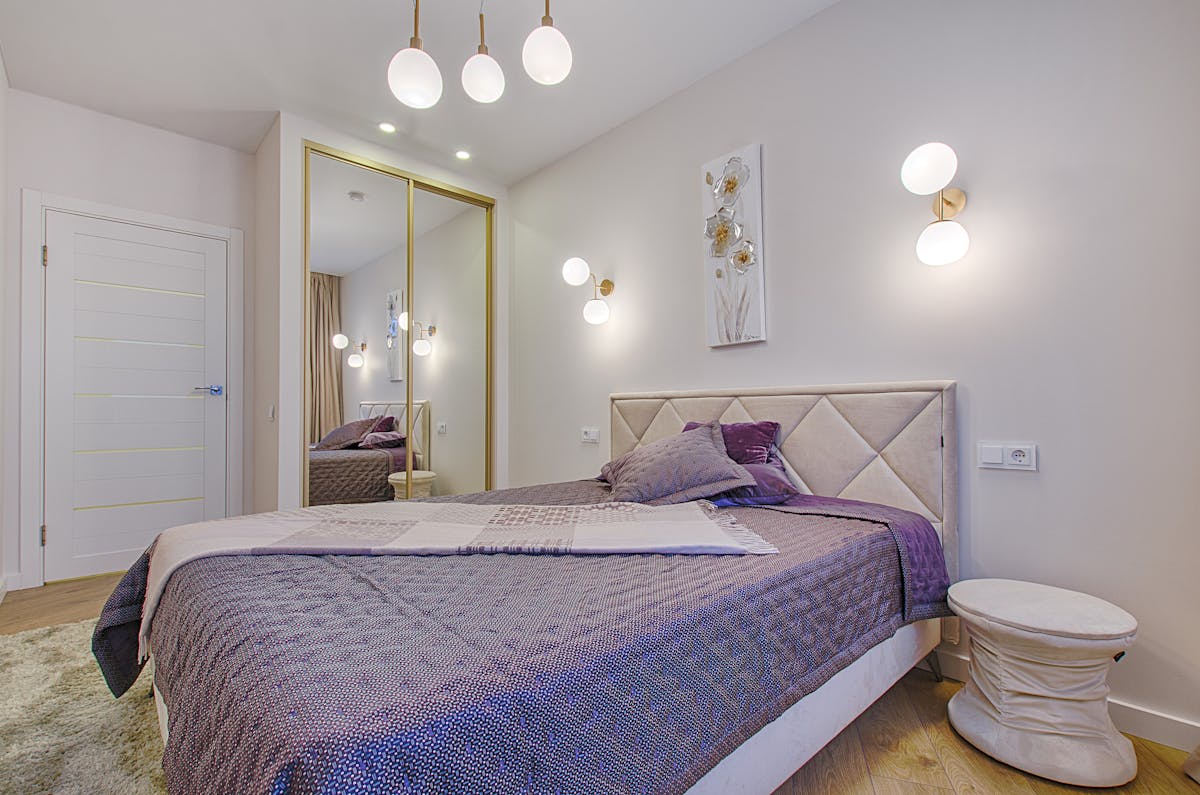
The wall above the bed receives more sustained attention than any other surface in your home. It’s the last thing you see before sleep and the first thing you see waking up, viewed not in passing like most wall art but in long, unhurried moments. This makes it the single most important art decision in any bedroom, and yet it’s frequently treated as an afterthought once the furniture is in place.
This guide walks through every major option for above-the-bed art: single statement pieces, symmetrical pairs, gallery walls, and textile alternatives, with the specific sizing, placement, and style guidance that determines whether the choice works.
The Sizing Rule That Matters Most
Art above a bed should span 60 to 80 percent of the bed or headboard’s width. This is slightly more generous than the sofa rule, because beds are typically viewed from a closer distance and benefit from feeling fully integrated with the headboard below.
| Bed Size | Bed Width | Recommended Art Width |
|---|---|---|
| Single/Twin | 90cm | 55-72cm |
| Double | 135cm | 80-108cm |
| Queen | 150cm | 90-120cm |
| King | 180cm | 108-144cm |
| Super King | 200cm | 120-160cm |
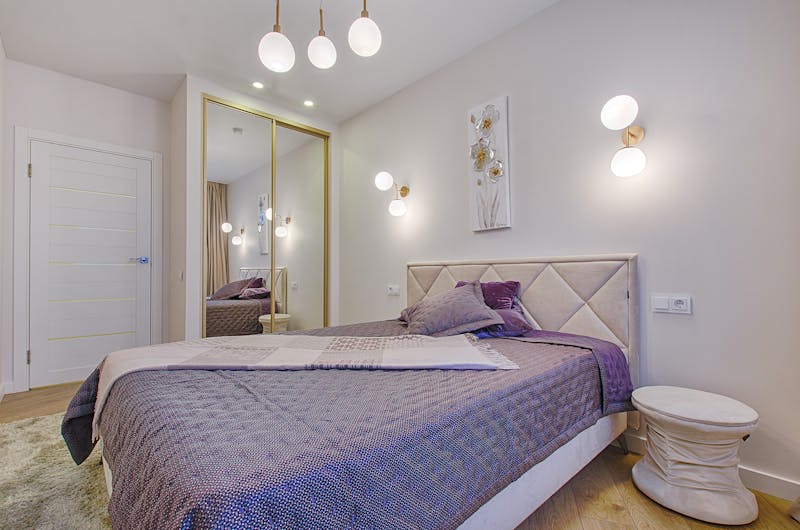
Option 1: The Single Statement Canvas
One large, confident piece centred above the bed is the most straightforward and consistently successful approach. It creates a focal point without requiring complex composition decisions, and at the right scale it can entirely define the room’s mood.
Option 2: The Symmetrical Pair
Two matching or complementary pieces, mirrored on either side of centre, create a calm balanced formality that works particularly well in traditional or hotel-inspired bedrooms.
Option 3: The Gallery Wall
A more personal, collected display works well in bedrooms that want to feel warm and lived-in. Keep the gallery arrangement contained within roughly the bed’s width, and use a denser, more tightly-spaced composition than you might use in a living room.
Option 4: Textile and Tapestry
A large woven tapestry or quilted textile panel above the bed brings warmth, softness, and acoustic dampening that hard-surface art can’t offer, working particularly well in boho, Scandinavian, and natural-material bedroom styles.
Choosing the Right Mood
Because bedroom art is viewed in restful, unhurried states, the subject matter matters more here than almost anywhere else in the house. Avoid art with high visual tension, sharp angularity, or jarring colour contrast even if you’d enjoy it elsewhere. The most successful bedroom art has a quality of visual rest: soft gradients, gentle abstraction, calm landscapes, or quiet botanical studies.

Large Abstract Canvas — Soft Gradient, Calming Tones
90x60cm canvas in soft blush and sand gradients, the restful quality ideal for above the bed.
$82 View on Amazon
Symmetrical Botanical Pair — Set of 2 Framed Prints
Matching botanical pair designed specifically for bedside symmetry above a bed.
$58 View on Amazon
Woven Tapestry Wall Hanging — Natural Cotton
Large neutral-toned woven tapestry, adding warmth and texture above the bed without hard edges.
$68 View on Amazon
Calm Landscape Photography Print — Large Format
Soft-focus landscape photography in muted tones, genuinely restful subject matter for bedroom walls.
$55 View on Amazon
Custom Watercolour Abstract — Calming Palette
Hand-painted style watercolour abstract in soft, restful tones, made to order in bed-appropriate sizes.
View on Etsy
Quilted Fabric Wall Panel — Above Bed Scale
Large quilted textile panel in soft neutral tones, a genuinely unique above-bed alternative to framed art.
View on Etsy✕ What to Avoid
- High-contrast, visually jarring art above the bed, working against the room’s restful purpose
- Art too small for the bed; the 60-80% width rule is more generous here than other rooms, so follow it
- Heavy, frameless glass-fronted pieces directly above where heads rest; consider weight and safety
- Hanging too high; disconnect between headboard and art reads as careless rather than intentional
- Overly busy gallery walls in small bedrooms; they can feel visually overwhelming at close range